
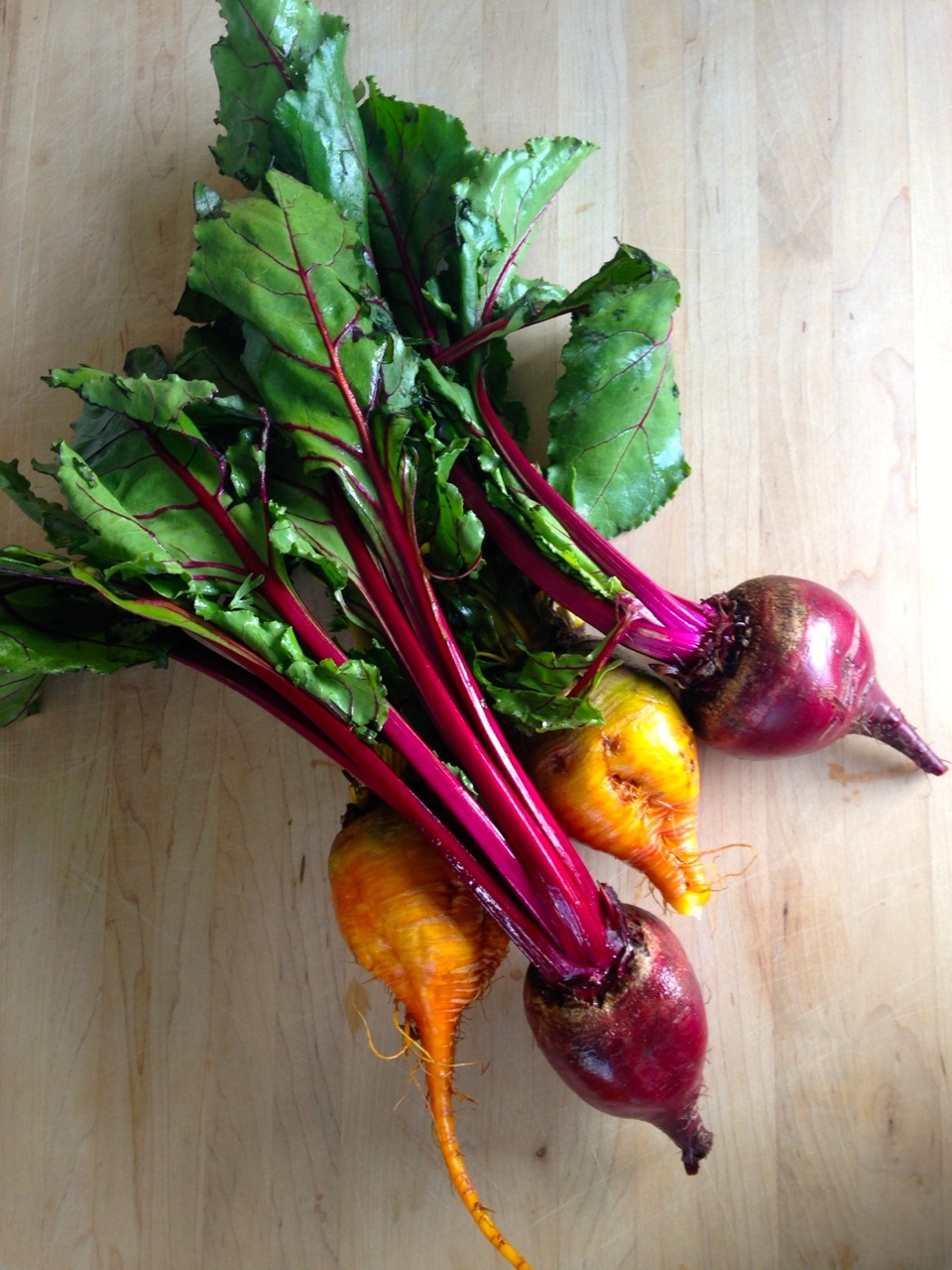
A bunch of red and gold beets are as pretty as any bouquet!
The beet is a muchly-maligned vegetable, and I’m not really sure why. Maybe it’s the earthiness. If that were the case though, why not bag on turnips, rutabagas and parsnips? Or on potatoes, fer cryin’ out loud?!
What I find most amazing about beets is that you can do so much with them:
Beets are good served hot or cold, pickled or not.
You can grate them into a salad raw (Thanks, Martha Rose Shulman for that revelation!).
Speaking of salad, beet greens make a good one. Or you can cook the greens, mixing them with other, horsier ones like collards or more tart ones like mustard to achieve a nice balance of flavor.
You can eat the stems (the thinner ones; save the thick ones for the stock pot). Cut into bite-sized pieces they can go into the pot with the greens. Or they can be braised on their own, pickled, or battered and fried for a snack.
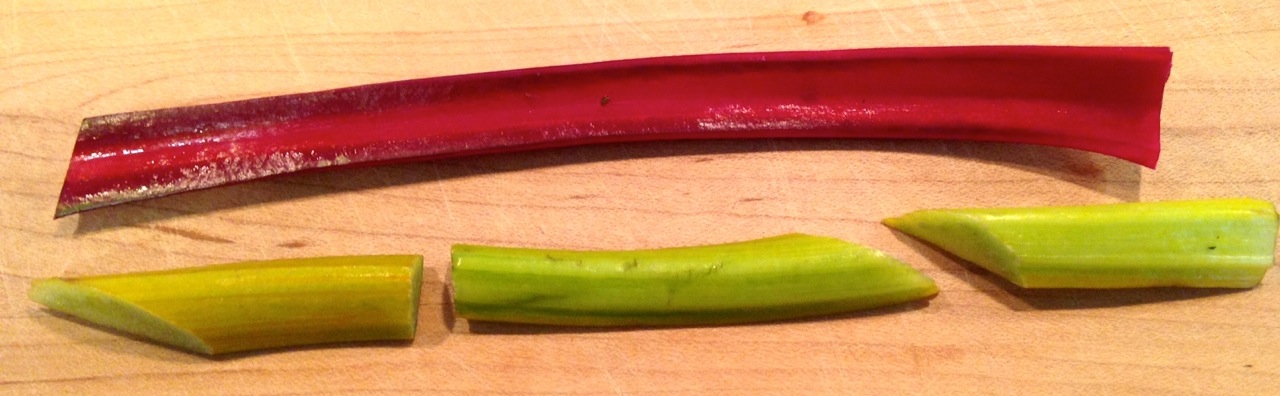
The stems are good to eat, so don’t throw them away!
Beet leaves and stems are worthy food items that too often get thrown out, so whenever the person I’m buying beets from at the farmers’ market offers to trim my beets for me, I always say nooooo! (I think they’re hopeful that they can keep my greens and stems for themselves.)
You can juice your beets and use the juice to make pasta that’s fit for royalty. Take a look at my friend Ken’s neriage noodles, a mass of Christmasy looking pasta colored with the juices of beets and broccoli rabe. (And keep browsing his site—Ken has been doing some absolutely amazing things with pasta!)
You can make a variety of hot and cold soups out of beets.
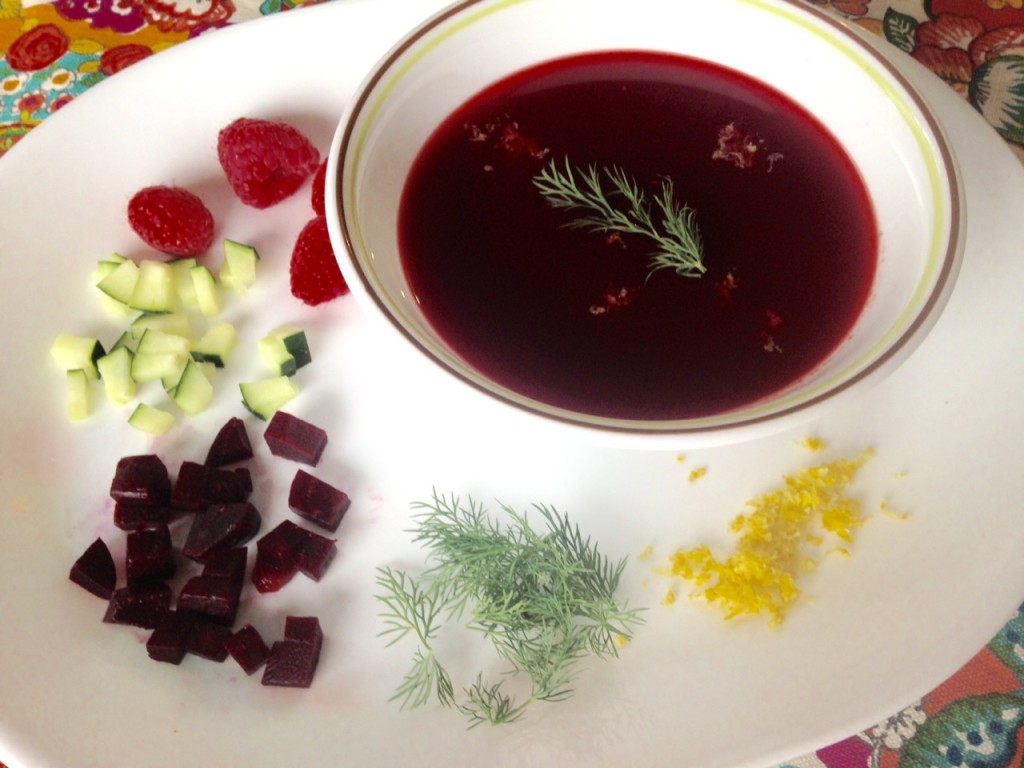
raspberry-beet borscht with loads of add-ins and add-ons
I made this borscht for a recent cookbook club dinner, this month’s dishes all prepared from The Artisan Jewish Deli at Home. The recipe for this particular borscht calls for a significant amount of raspberries. Seemed odd to me, considering many borscht recipes call for meat. But when I thought about it I realized that borscht is like a lot of dishes—its contents vary depending on personal preference, what you happen to have on hand when the urge to make borscht strikes you, and whether you’re a free spirit in the kitchen or a tradition-bound, recipe-faithful cook.
The next day I took the leftover borscht and made sorbet. The raspberries gave it fruitiness and the beets bolstered the sweetness and added a velvety texture.
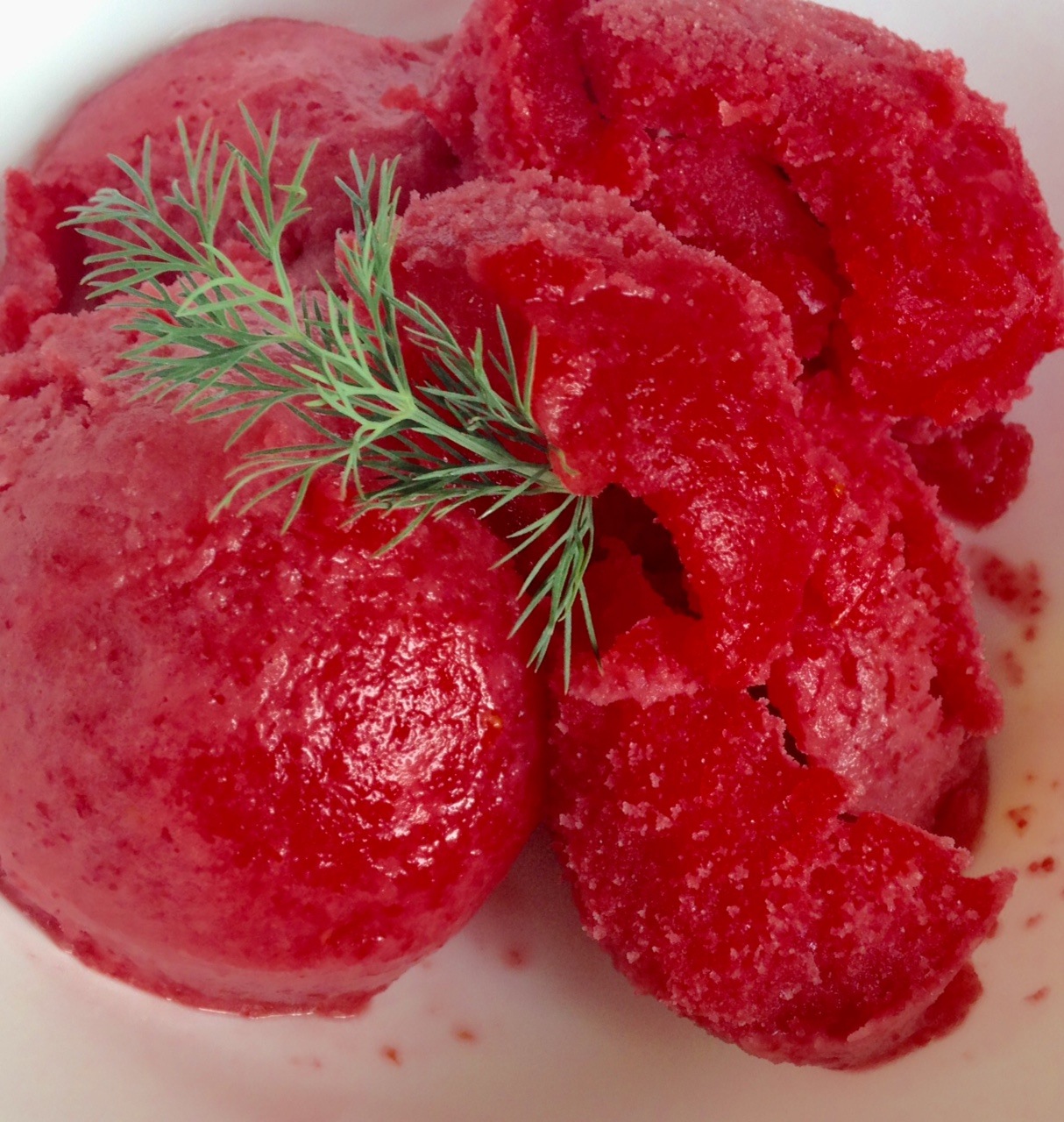
raspbeet sorbet? raspborscht sorbet?
I love beets’ visual appeal. Their deep, ruby red and lush, rich gold varieties are a pure pleasure to behold. And the chioggia variety has those darling peppermint stripes that make your serving of beets look like total eye candy. Even the most basic green salad will look like a party on a plate if you shave a raw chioggia thinly and toss it into the mix.
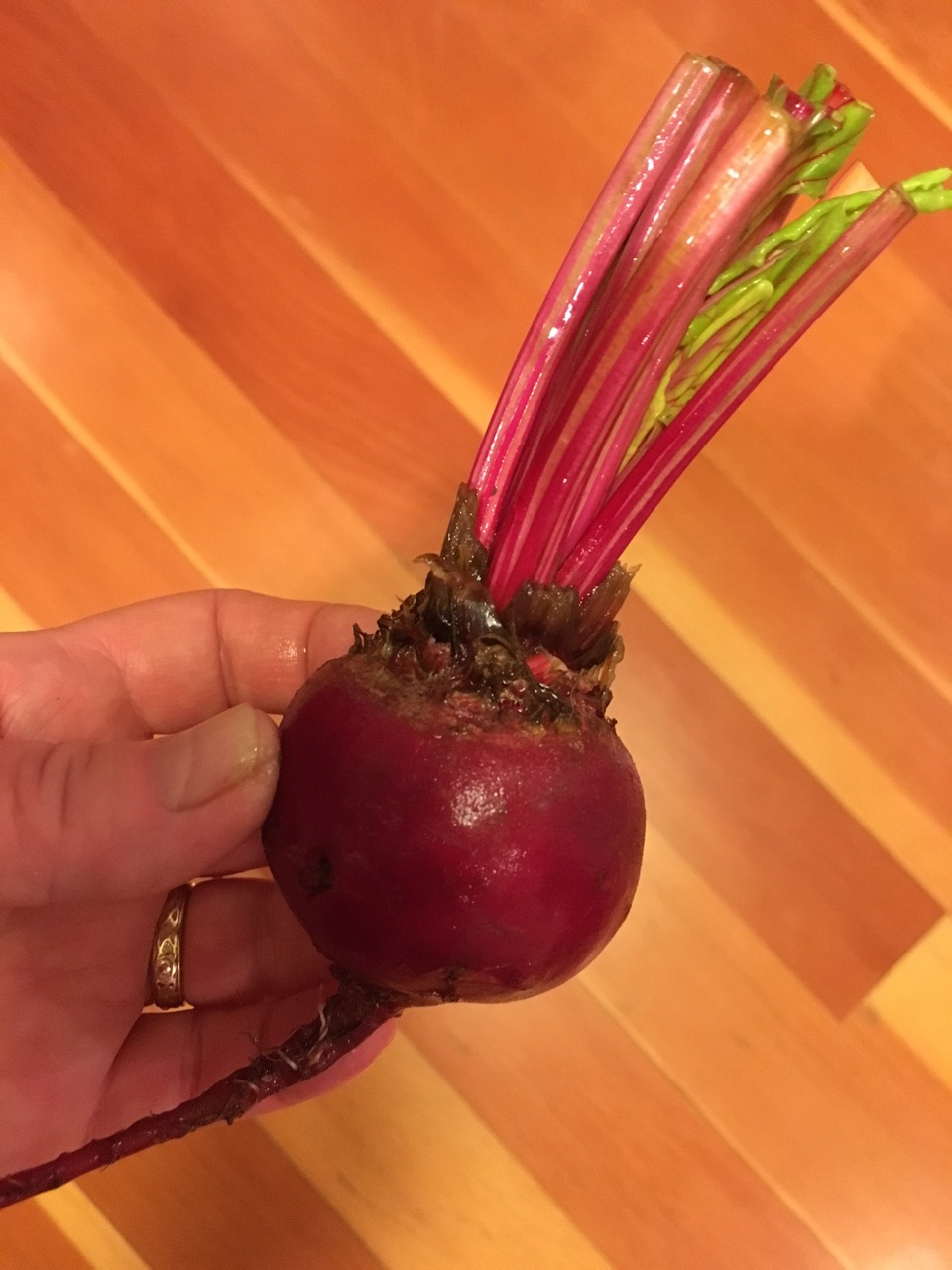
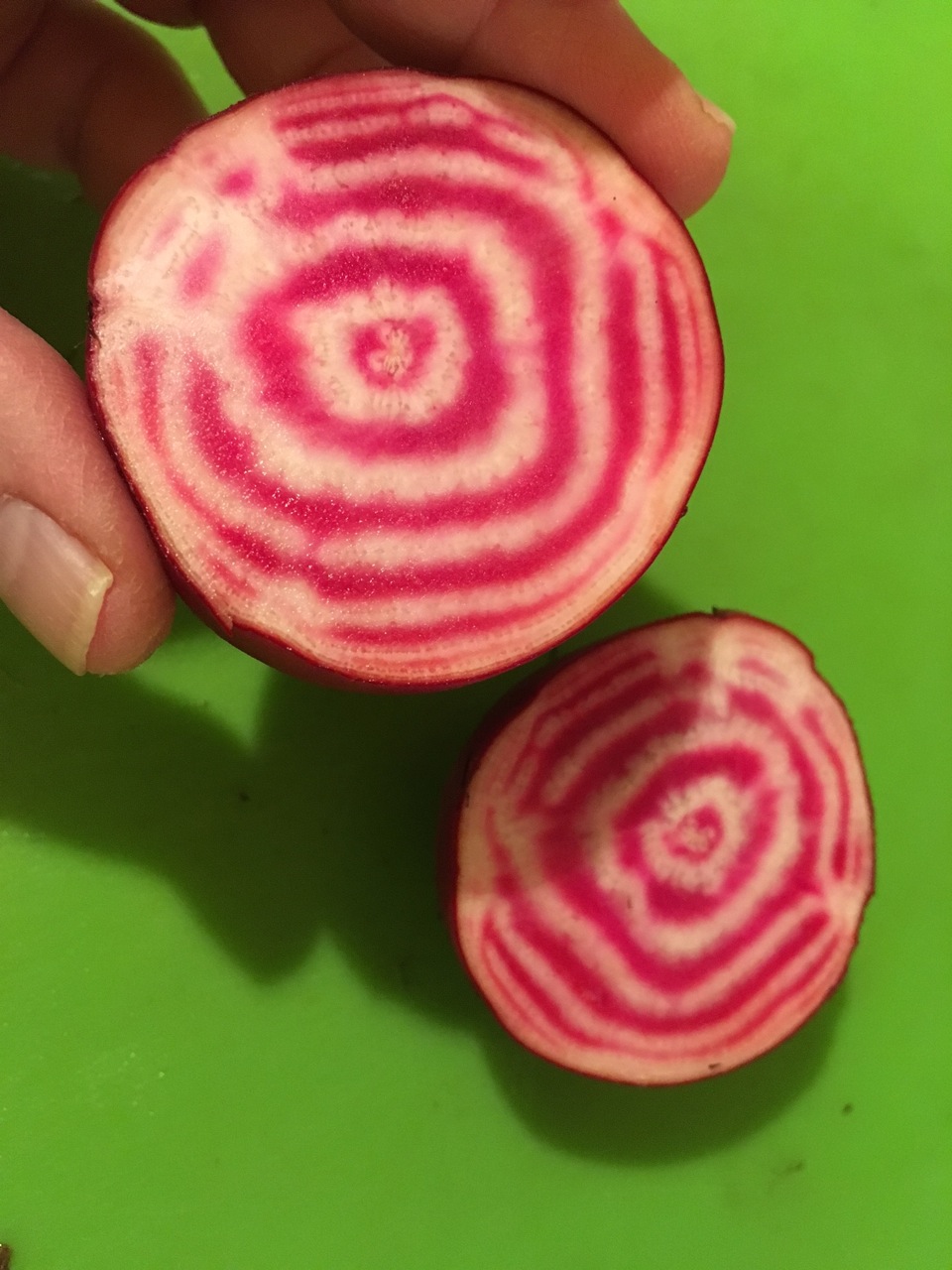
The exterior of the chioggia looks like that of any other beet, but inside…ta-dahhh!
The exterior of the chioggia looks like that of any other beet, but inside… ta-dahhh!
I prefer roasting beets to simmering them, because roasting concentrates their flavor and amps up their sweetness—and frees you up to focus on making the rest of your meal. Once you’ve trimmed their tops (leave about an inch of stem) and “rat tails” (don’t peel them until after they’re done), tossed them with some olive oil, put them in an aluminum foil-covered roasting dish, and popped them into a 425ºF oven for an hour (or until the point of a knife glides in and out easily), you can let the oven work its magic on them and focus on making the rest of your meal.
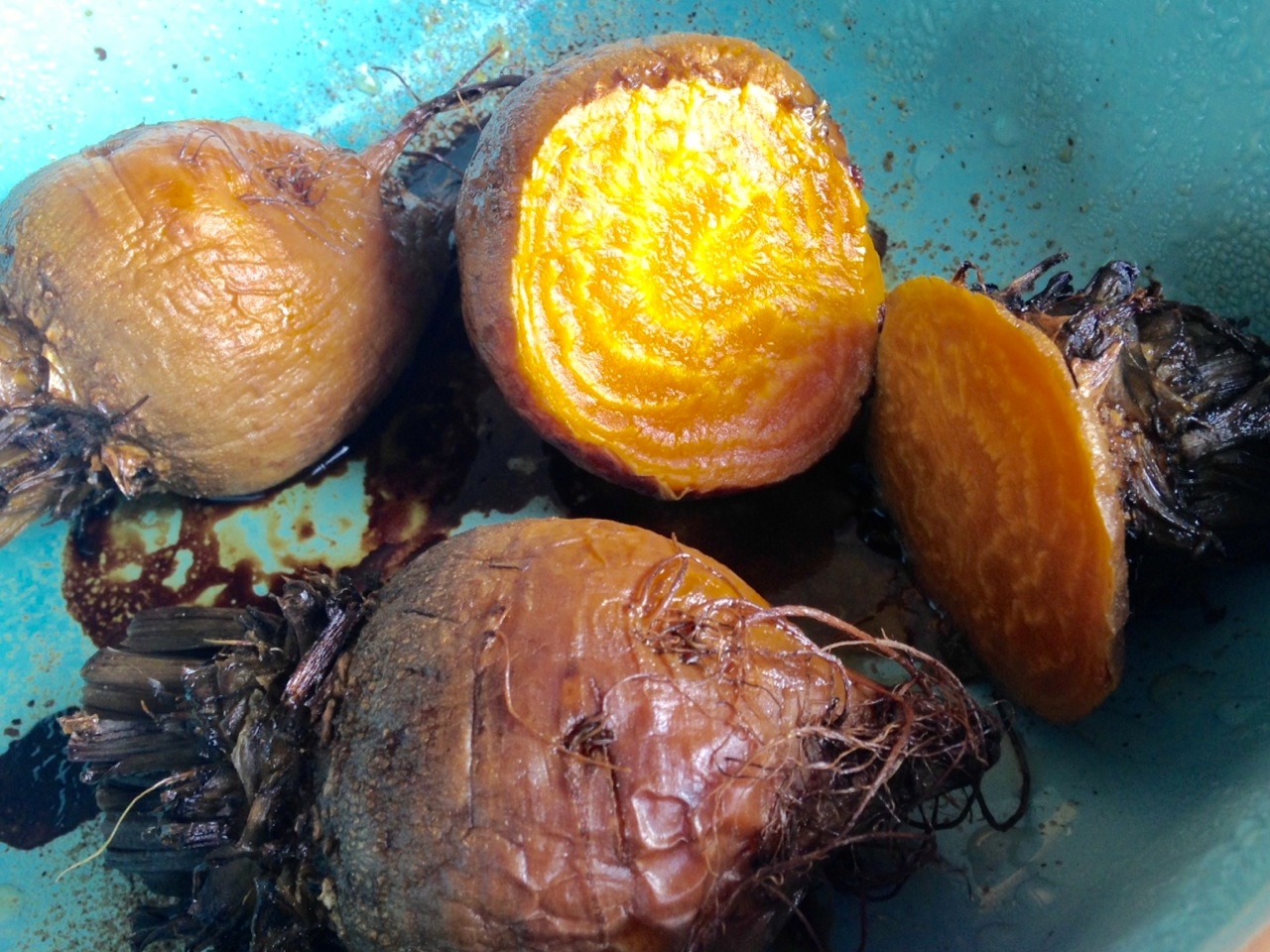
Roasted beets are a flavor powerhouse just waiting for whatever whim strikes you!
What can you do with those beets once they’ve been roasted to tantalizing perfection? Just about anything at all! My favorite thing is to cool them and add them to any salad that wants a little heft and sweetness. Here’s last night’s dinner, a frisée salad, sans poached egg. (Possibly the only item more versatile than the beet is the egg, and we’ve run out. Sigh!) We resorted to using the last two of the hard-boiled eggs we keep on hand for snacking and kept all four protein sources in the salad (egg, nuts, bacon and cheese).
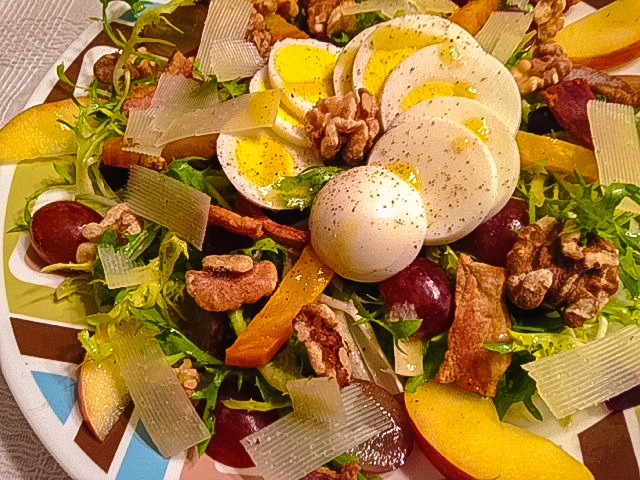
frisée salad with a few differences—both gold and red beets, shavings of manchego instead of bleu cheese and that hard-boiled egg…
Bonus tip: buy beets in bulk and roast them all at once. You can keep them in the fridge for a week—if they last that long—and use them as the fancy strikes you.
So to my friend Suzanne, who asked me to address the issue of beets on my blog I say, here ya go, gal. Now get busy.
Beets are the Swiss Army Knife of the vegetable world!


2 Responses to …the beets go on…